Are Adult Ski Camps Worth the Money?
Short answer: yes—if you're the right type of skier.
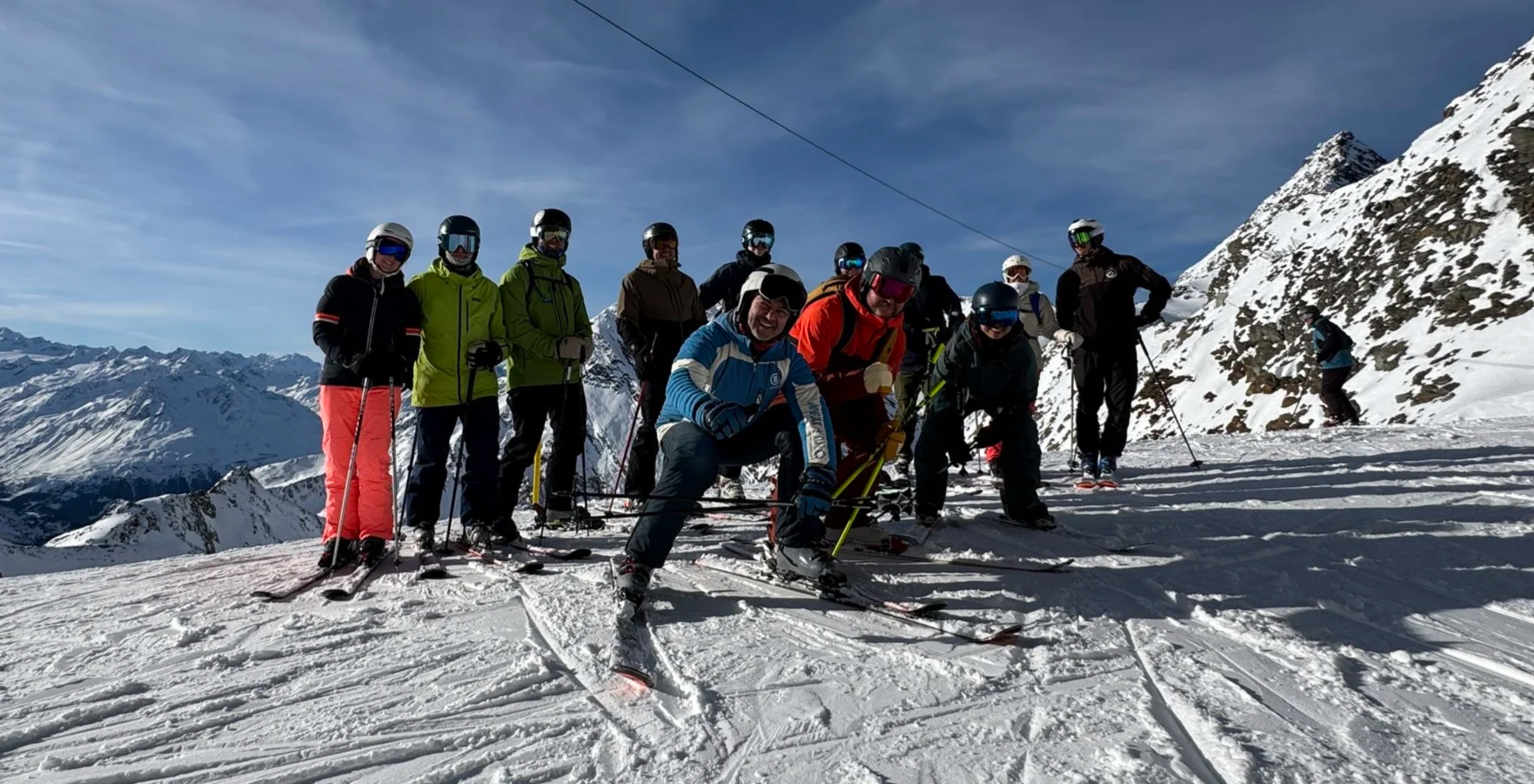
I've been running adult ski camps for over five years and coaching skiing for much longer than that. During that time, I've worked with everyone from intermediate skiers looking for more confidence to expert skiers chasing better carving and performance.
One thing I've learned is that most people ask the wrong question.
Instead of asking, "Are ski camps worth the money?" they should be asking:
"How much is it costing me to stay stuck at the same level year after year?"
Why Many Adult Skiers Stop Improving
One of the biggest surprises for me has been how many adult skiers believe they've reached their limit.
They can ski every run on the mountain, so they assume there isn't much left to learn.
In reality, there is a huge difference between getting down a run and skiing it well.
Many skiers can survive a black run. Far fewer can ski it efficiently, confidently, safely, and with control. Even fewer can carve clean turns, adapt to changing snow conditions, and finish the day without feeling exhausted.
The good news is that adults can improve far more than they think.
I've seen skiers in their 40s, 50s, 60s, and even 70s make dramatic improvements in just a few days when they're given the right environment and coaching.
Why Ski Camps Work So Well
The biggest difference between a good ski camp and regular skiing is focused repetition.
Most recreational skiers spend their day exploring the mountain. That's fun, but it isn't always the fastest way to improve.
At our camps, skiers spend time repeating runs in a familiar environment where they can focus entirely on their technique. When you remove distractions and create consistent conditions, improvement happens much faster.
One of the most effective tools we use is skiing on private giant slalom courses.
Many people assume race gates are only for racers. In reality, they're one of the best learning tools available.
The gates create the turn shape for you, allowing you to focus entirely on balance, edging, pressure control, and timing. Instead of worrying about where to turn, you can concentrate on how you turn.
The result is often much faster improvement than people expect.
A Real Example: Roger's Story
One skier who stands out is Roger.
When Roger first joined one of our camps, he was lacking confidence and carrying extra weight that made skiing more physically demanding.
Over time, the camps gave him a reason to improve his fitness and commit to skiing more seriously.
As his technique improved, he became more balanced and efficient on his skis. He stopped wasting energy fighting the mountain and started working with it.
The breakthrough for Roger was learning to carve properly.
Once he experienced that feeling of the ski bending and accelerating through the turn, everything changed.
His confidence increased dramatically. He could ski longer without getting tired and enjoy terrain that previously felt challenging.
Roger has now attended four camps and continues to return because the improvements didn't just make him a better skier—they made skiing more enjoyable.
The Most Common Improvements People Notice
At the end of a typical five to seven-day camp, the feedback is remarkably consistent.
People usually report:
More confidence
Better balance and stability
Improved carving
Better speed control
Less fatigue
Greater confidence on steeper terrain
The ability to ski with friends and family more comfortably
Better understanding of different snow conditions
Interestingly, most people don't talk about technical details.
They don't say, "My edge angles improved."
They say things like:
"I feel safe."
"I finally understand carving."
"I can ski with my family now."
"I don't feel exhausted at the end of the day."
Those are the outcomes that matter.
Who Gets the Most Value From a Ski Camp?
In my experience, the people who get the most value are:
Intermediate to expert skiers
Skiers who can already parallel ski
People who want to improve rather than simply cruise around the mountain
Skiers who enjoy meeting like-minded people
People who are open to feedback and coaching
The best results come from skiers who trust the process and are willing to work on the fundamentals.
Who Shouldn't Attend a Ski Camp?
Ski camps aren't for everyone.
If you're still skiing in a snowplough, you'll likely get more value from beginner lessons first.
Similarly, if you're looking for a completely independent ski holiday with no group structure, a ski camp may not be the right fit.
Fitness is another consideration.
We've occasionally had guests who simply weren't fit enough to take advantage of full ski days. The good news is that many of them returned the following season after improving their fitness and enjoyed the experience much more.
Common Misconceptions About Adult Ski Camps
The biggest misconception is:
"I'm not good enough."
In reality, many of the people who worry about this are exactly the people who benefit most.
Another common misconception is that ski camps are only for racers.
Most people attending our camps have never raced before.
Many are simply recreational skiers who want to carve better, ski more confidently, and enjoy their time on snow.
Perhaps the biggest surprise for many guests is how much fun skiing gates can be.
It's often the highlight of the entire week.
Why Some Skiers Stay Stuck
After coaching for many years, I see the same three issues repeatedly:
1. Poor Equipment Setup
Boots that are too loose and skis that aren't appropriate for the skier can make improvement extremely difficult.
2. Technical Habits That Feel Right But Are Wrong
Leaning back, steering with the upper body, and other common habits often feel natural but limit performance.
3. Trying to Skip the Learning Process
Many skiers try to copy advanced skiers without mastering the progressions that create those skills.
The fastest improvements happen when people follow a structured process.
So, Are Adult Ski Camps Worth the Money?
For the right skier, absolutely.
A quality ski camp provides expert coaching, structured progression, video analysis, clear goals, and an environment specifically designed to accelerate improvement.
But perhaps the biggest benefit isn't becoming a better skier.
It's enjoying skiing more.
When you're confident, balanced, in control, and able to carve properly, the mountain becomes a completely different experience.
That's why so many of our guests return year after year.
Many initially tell us they'll only attend once.
Then they experience the coaching, the improvement, the friendships, and the feeling of skiing at a level they never thought possible.
And before long, they're booking their next camp.
Interested in joining a camp after reading this? Wondering if you’re good enough? Click Below